
Due to planned maintenance, your school has disabled school system log-ins at this time.
You may continue shopping as a guest, or by creating a bookstore-only account.
Please complete the purchase of any items in your cart before going to this third-party site.
Also note that if you qualify for financial aid, items purchased through this site will not be subject to
reimbursement.
Connecting readers with great books since 1972! Used textbooks may not
[...]
Connecting readers with great books since 1972! Used textbooks may not include companion materials such as access codes, etc. May have some wear or writing/highlighting. We ship orders daily and Customer Service is our top priority!
Description:
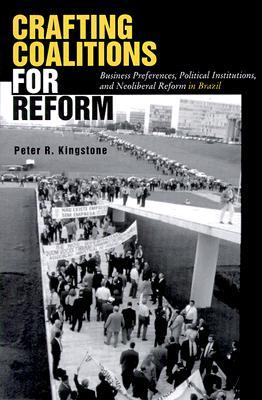
The success of political efforts to create a more open economy in Brazil over the past decade has depended crucially on support from the industrial sector, which long enjoyed the benefits of protection by the state from economic competition. Why businesses previously so sheltered would back neoliberal reform, and why opposition arose at times from sectors least threatened by free trade, are the puzzles this book seeks to answer.
Drawing on more than one hundred interviews with industrialists and business association representatives, as well as a wide range of other sources, Peter Kingstone argues that the key to understanding the behavior of industrialists lies in the impact of four factors on their preferences for reform: the effect of economic crisis on industrialists' perception of the viability of the earlier development model; the sectoral location of their firms in the economy and the advantages historically accruing therefrom; the adjustment options available to them given their position in the market; and the credibility of the government's promises about reform and its tactical choices for getting them implemented through the political system.
The mix of these four factors, Kingstone shows, left business preferences relatively malleable and thus available for support of reform, even in the face of potentially high costs. Whether such support was forthcoming depended on industrialists' perceptions of the ability of government leaders to deliver on their promises. Widespread resistance to reform occurred when leaders lost their credibility. Under Fernando Collor's leadership, that credibility was never recovered; under Fernando Henrique Cardoso's, it was recovered throughincreasing concessions to industrialists on the character of the reform program.
Expand description
Product notice
Returnable at the third party seller's discretion and may come without consumable supplements like access codes, CD's, or workbooks.
Connecting readers with great books since 1972! Used textbooks may not
[...]
Connecting readers with great books since 1972! Used textbooks may not include companion materials such as access codes, etc. May have some wear or writing/highlighting. We ship orders daily and Customer Service is our top priority!
Connecting readers with great books since 1972! Used textbooks may not
[...]
Connecting readers with great books since 1972! Used textbooks may not include companion materials such as access codes, etc. May have some wear or writing/highlighting. We ship orders daily and Customer Service is our top priority!
Very Good condition. A copy that may have a few cosmetic defects. May also
[...]
Very Good condition. A copy that may have a few cosmetic defects. May also contain light spine creasing or a few markings such as an owner's name, short gifter's inscription or light stamp.
Very Good condition. A copy that may have a few cosmetic defects. May also
[...]
Very Good condition. A copy that may have a few cosmetic defects. May also contain light spine creasing or a few markings such as an owner's name, short gifter's inscription or light stamp.